Krujë · 1764
Musée Ethnographique
Un parcours pièce par pièce dans une kulla albanaise du XVIIIe siècle
The Ethnographic Museum
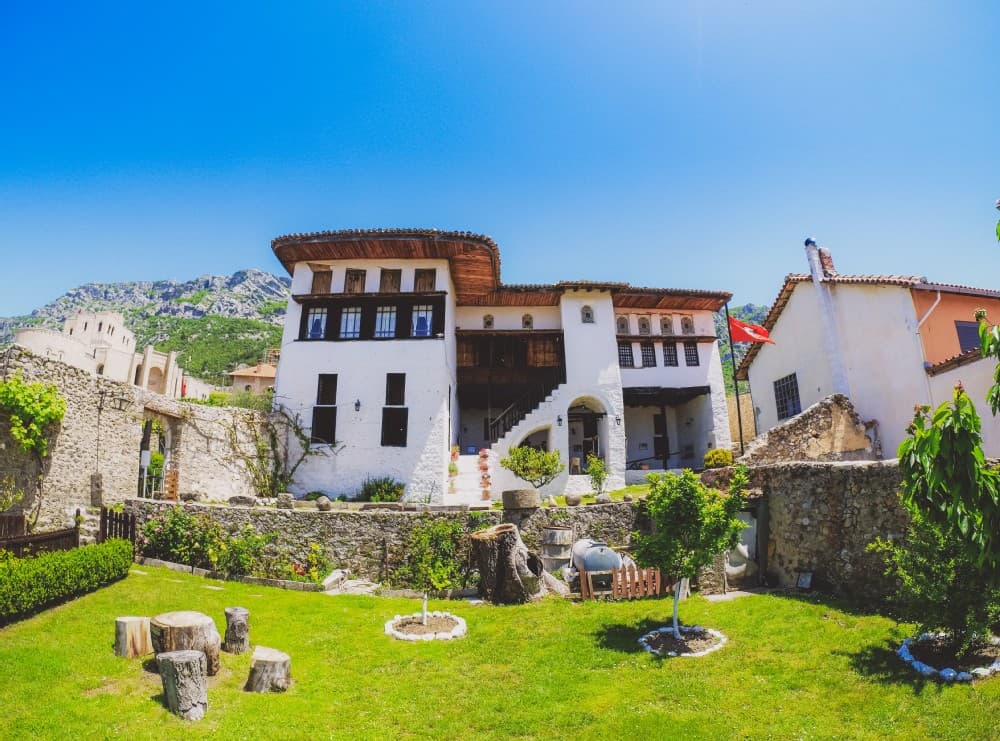
It is a traditional building built in the middle of the XVIII century (1764) by Kaplan Pasha Toptani. Its architecture is oriental with a closed corridor, a type of two-storey tower with stone walls 60-80 cm wide. In it are Baroque and Islamic paintings which adorn its main rooms. From the entrance, the arches of the gates with carved stones and the cobbled streets stand out. In this apartment are found many elements of the tradition of the area from lifestyle to dresses, customs, etc. At the entrance are some models of natural water sources which prove that Kruja had some of them — it is even thought that the origin of the name of the city comes from the word 'kroje' which means water spring in Albanian.

Traditional Tools
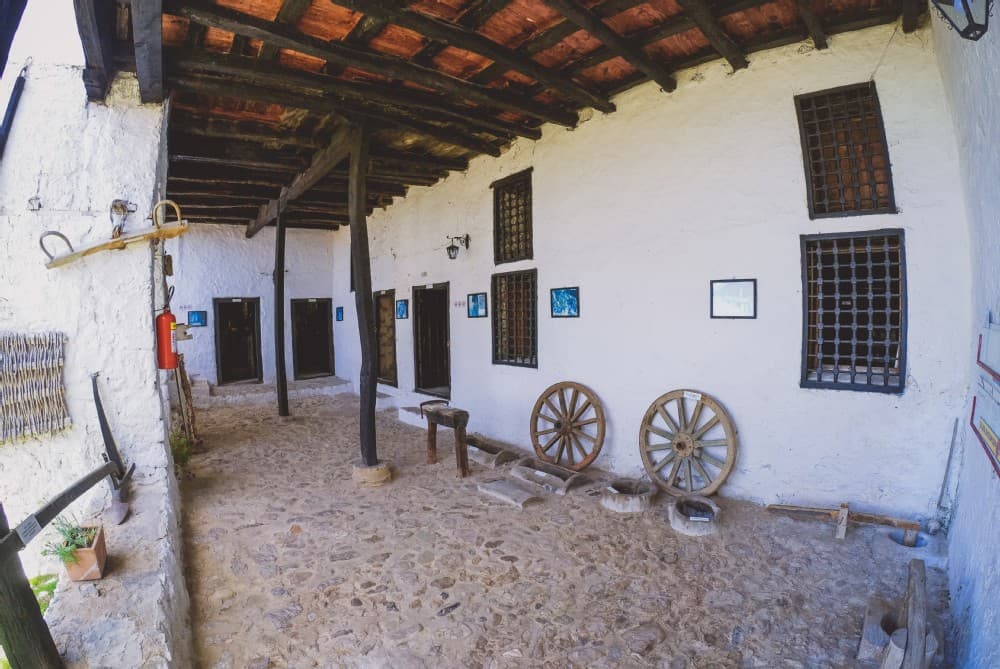
From the first-floor lobby, you get acquainted with the traditional tools of the farmer for tillage, the mechanisms of grinding the grain by hand and with water, the mechanisms of cleaning the grain for hashure (traditional dessert), etc. One of the exhibits is the tanning or processing of leather and the processes it went through, later used to make shoes. Also, in the premises of the house, you get acquainted with the processing of swamp straw and the production of hastras to sit or sleep.
Iron Work
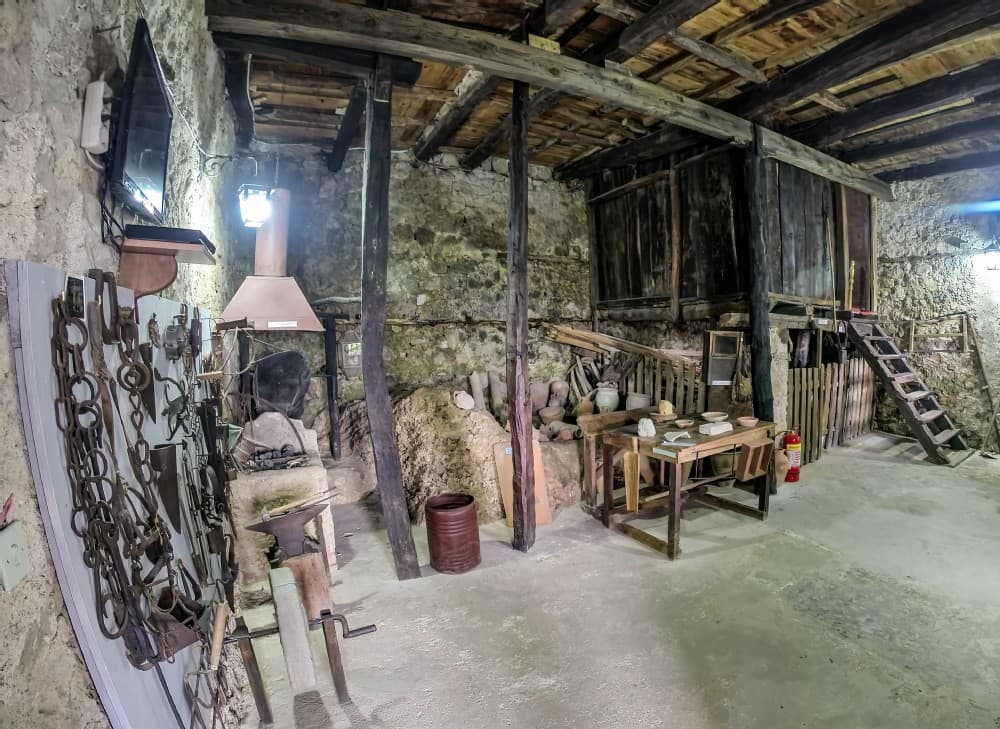
In the workshops on the first floor, you will see where iron is worked for the needs of the family and the market of Kruja, as well as ceramics where tiles, bricks, and objects of household use were produced.
The Distillery
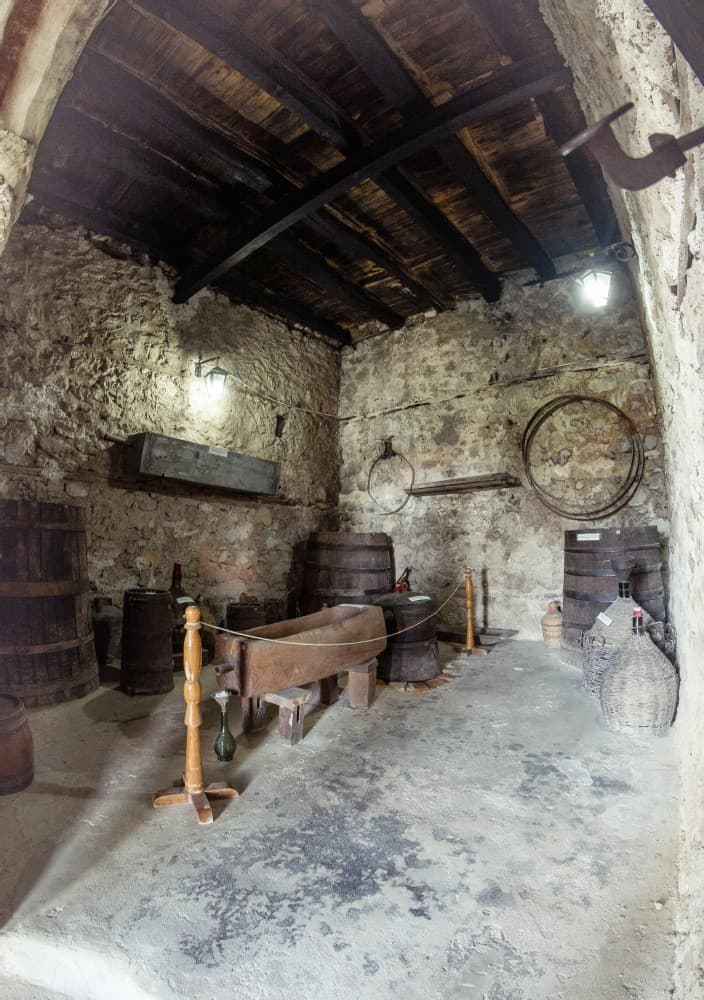
In the next workshop you will see the distillery where brandy (raki) and wine were produced.
Wool Processing
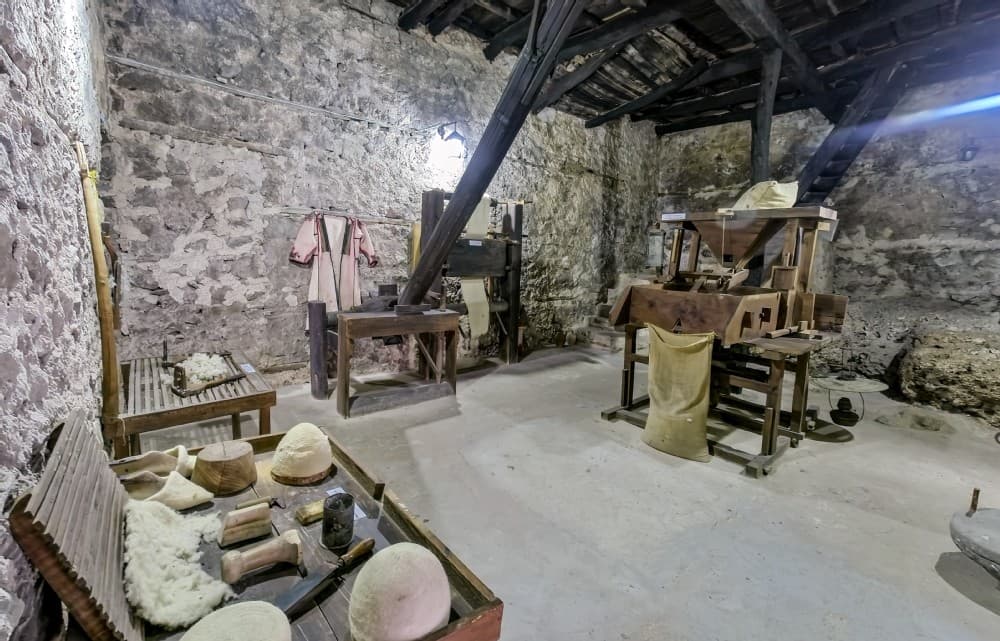
Then in another workshop, there is the water mill used to grind grain, the valance used to make felt or wool, and the processing of sheep wool used to make fez.
The Oil Mill
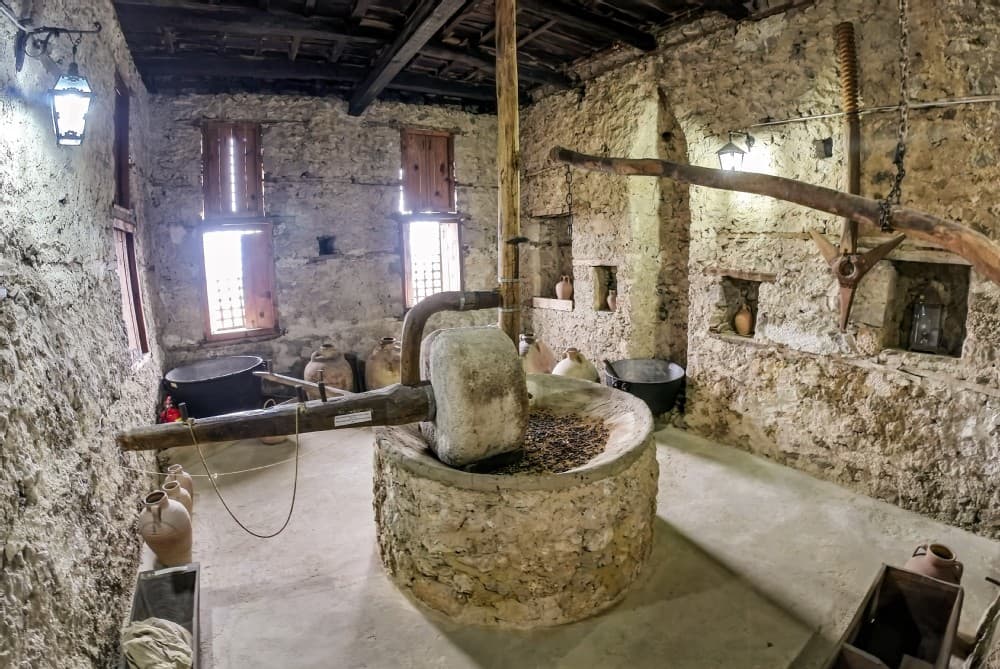
In the last workshop is the olive oil mill and many amphorae used to store the olive oil for a long time.
2nd Floor
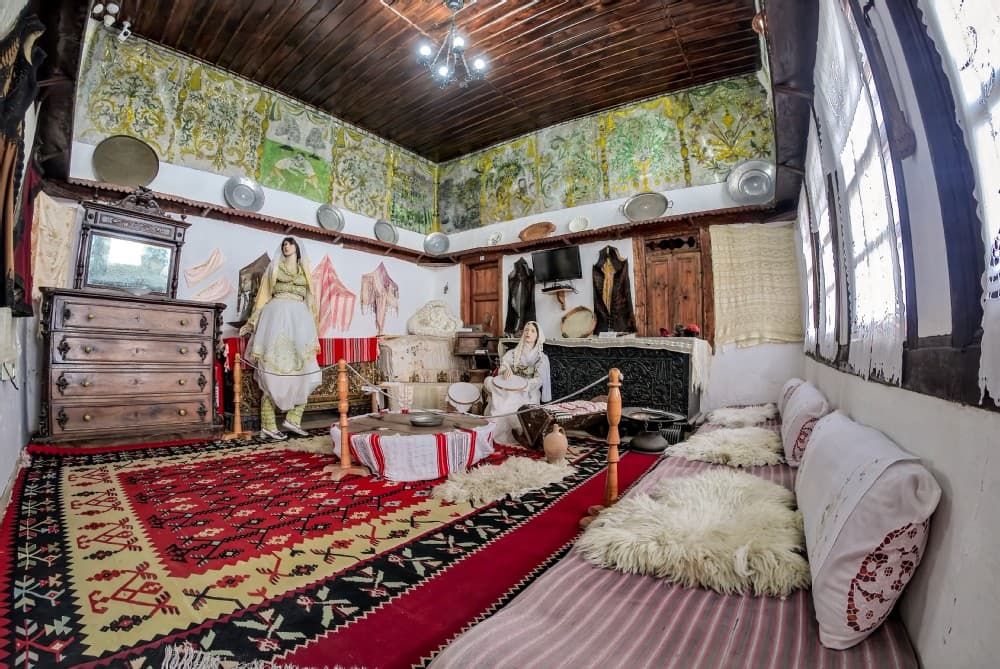
The second floor of the apartment starts from the ladies' room or the bride's room where the boxes are distinguished where the bride brought her dowry, which is original; the mural paintings of the XVIII century and two special types of windows which above are with gypsum works only for light and below for ventilation, with woodwork. The corridor serves as a link between the rooms where you will also see the wedding dresses for the groom and the bride, which is silk embroidered with gold, silver, and river pearls (inxhi). One peculiarity is that all the doors are low which forces you to lower your head as a sign of respect in each room, every time you enter or leave that room.
Men's Room
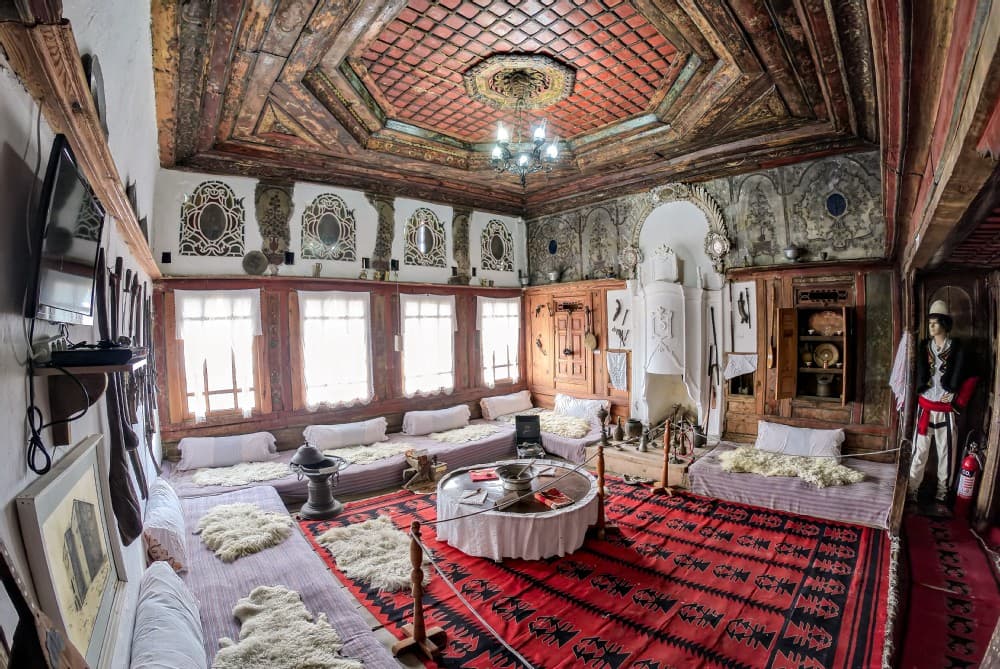
The men's room is the most beautiful and interesting of all, original of the XVIII century. Inside you will see the ceiling, the weapons exposed on the wall, and the chimney that is on the other side of the wall, in the family room. You will see the dome-shaped ceiling covered with glass and the holes in the walls from where the steam came out.
Living Room
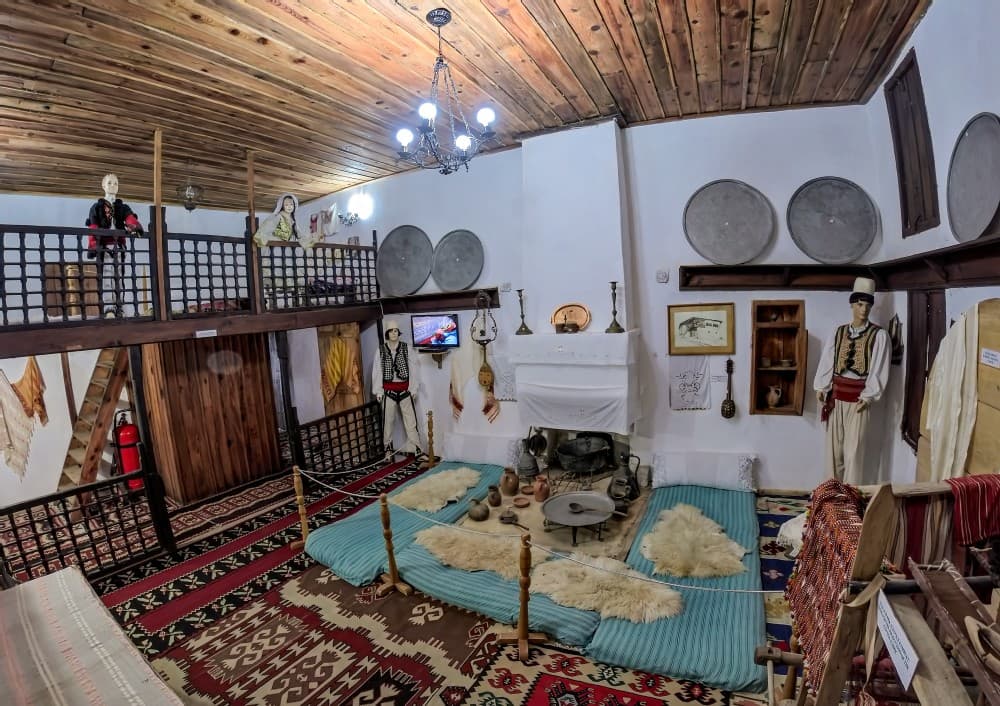
There is a part in the balcony of the living room upstairs where children were kept from sitting down to eat with adults, the chimney that heats the room and the water of the hammam (bath) at the same time, and also the utensil or loom used to make carpets.
Kitchen
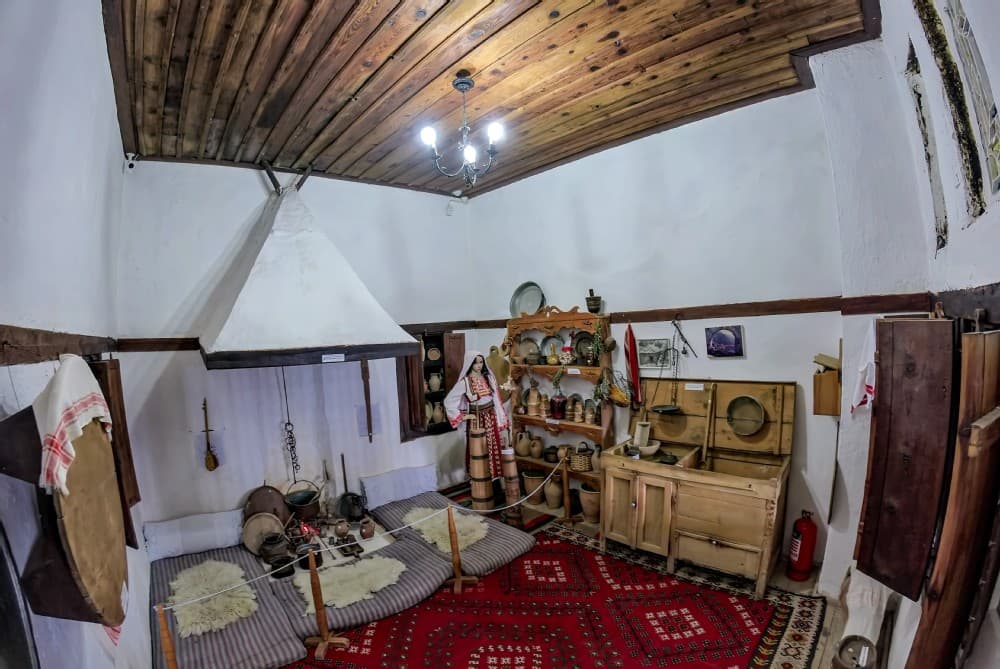
The kitchen has an original aspirator-type chimney, various ceramic dishes, copper, and wood. The kitchen is also used as a bedroom for the elders of the family. At the exit you will see the carnation tools and ceiling rosettes that are over 300 years old, as well as the pantry and canning room for winter fruits and vegetables.
Bedroom
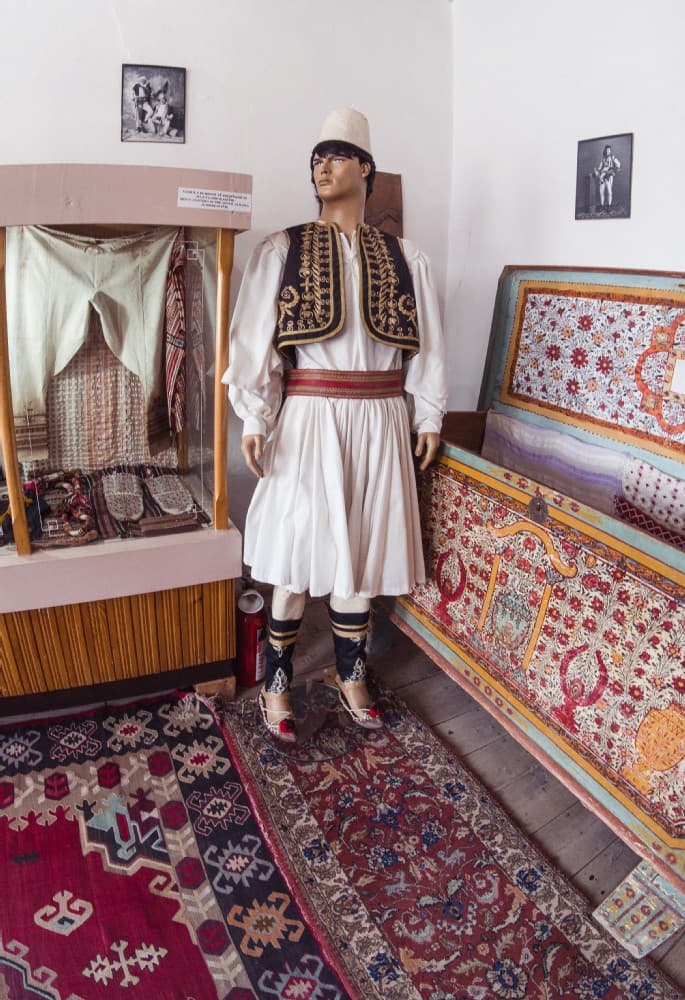
In the large bedroom are exhibited clothes of Catholic and Muslim tradition, used in the city of Kruja or coming from the inhabitants of other areas.